The Distribution Trap

Why Founders Build Great Products But Still Fail
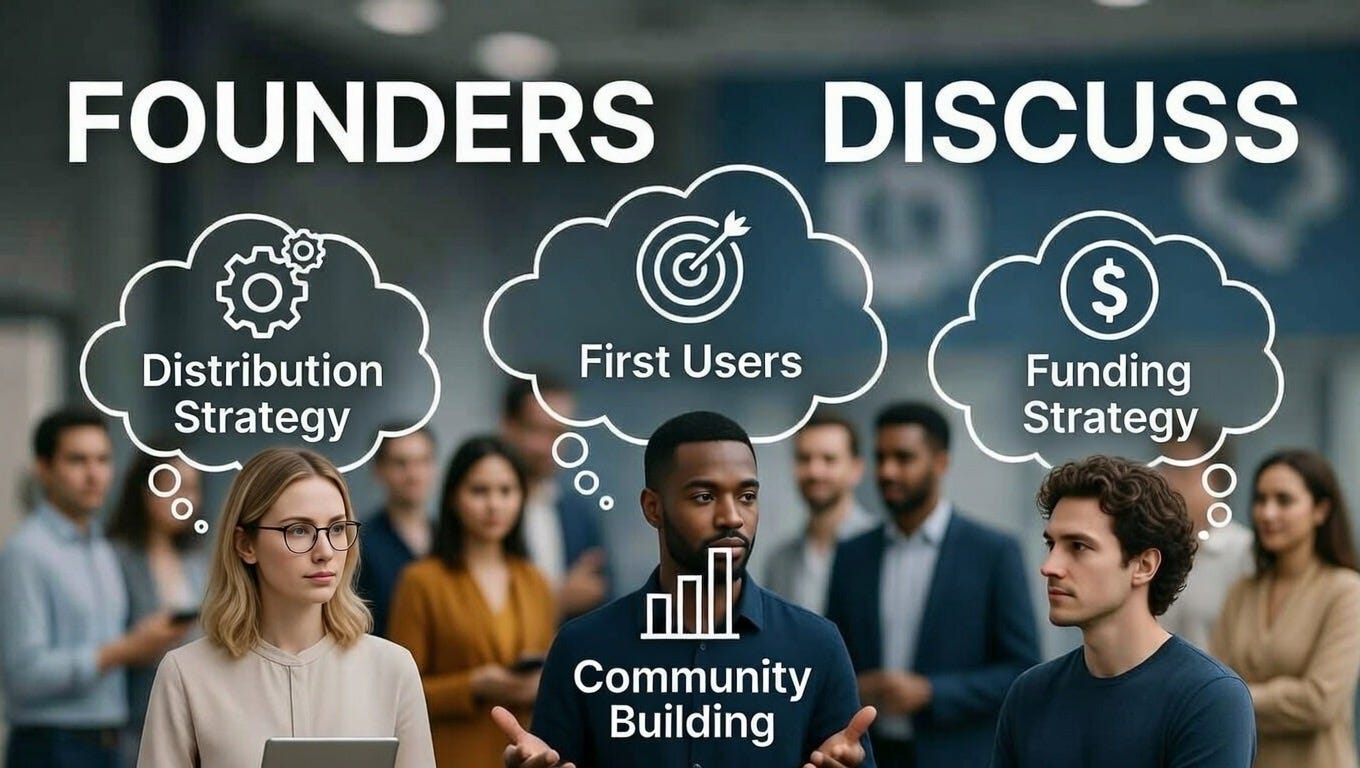
Over the past few weeks our team at FundnAI has been spending time inside startup communities. Reddit threads. X conversations. Founder forums.
We were not promoting anything. We were simply observing how founders talk about the problems they face while building.
One theme kept appearing again and again.
Distribution.
Not artificial intelligence.
Not product features.
Not technical complexity.
Just getting a product into the hands of the first real users.
Across different communities founders ask very similar questions.
Where do the first users come from?
Should the focus be content or outreach?
Do founders need an audience before building a product?
When is the right moment to start thinking about investors?
The more we read these conversations the clearer something became.
Many founders do not struggle because they cannot build.
They struggle because they cannot solve distribution early enough.
Marc Andreessen once said he passes on founders who underestimate distribution. The reason is simple. Great products without distribution often launch to silence.
The uncomfortable reality is that distribution is not something that can simply be added later. It has to be designed from the beginning.
In this article we explore the patterns we keep seeing in founder conversations. We also look at the most common mistakes around distribution and the strategies that actually move the needle.
Why Distribution Feels Like a Black Box
For many founders distribution feels mysterious. It is talked about frequently but rarely explained clearly.
Several patterns appear repeatedly when founders describe their struggles.
Over Reliance on Build It And They Will Come
Many founders assume that a strong product will naturally attract users.
History shows that this almost never happens.
Brilliant products are launched every year and many of them disappear quietly because there was never a plan to reach the first users.
Search engine optimization strategies become crowded quickly. Social platforms become saturated. Techniques that once worked lose effectiveness once everyone copies them.
Distribution channels rarely remain easy for long.
Not Owning Distribution Channels
Another pattern we see frequently is founders building entirely on platforms they do not control.
Social networks are useful but they are also unpredictable. Algorithm changes can drastically reduce visibility overnight.
The most resilient founders tend to invest early in channels they actually control. Email lists. Communities. Direct relationships with customers.
Even a small but loyal audience can become extremely valuable over time.
Timing And Resource Mismatch
Many founders treat distribution as a problem that appears after the product is finished.
In reality distribution should influence the product from the very beginning.
When founders ignore this early constraint they often end up building something impressive that no clear audience is waiting for.
Another issue appears frequently with highly technical founders. Building feels comfortable. Outreach does not. As a result distribution is postponed until much later.
By that time momentum is harder to build.
The Non Technical Founder Advantage
Interestingly some non technical founders approach this differently.
Instead of focusing only on building features they spend significant time understanding where customers actually spend time online.
They study communities. Forums. Search behavior.
This early attention to distribution sometimes gives them an advantage over technically stronger competitors.
As Greg Isenberg once described it, the startup graveyard is full of great products that never figured out how to grow.
Strategies That Actually Move The Needle
While distribution challenges are common, founders who succeed tend to approach the problem differently.
Here are several strategies that appear repeatedly among companies that gain early traction.
1. Design Distribution Before Writing Code
Before building anything successful founders ask simple questions.
Where do potential users spend time online
What problems do they talk about publicly
What communities already exist around the problem
By answering these questions first founders can design products that naturally appear where users are already looking.
Many founders also validate demand early through waitlists or pre orders before investing heavily in development.
2. Find Product Channel Fit
Just as products need product market fit, distribution requires product channel fit.
Different products naturally perform better on different channels.
Business software often spreads through LinkedIn conversations or direct outreach.
Consumer products might grow through short form video or creator partnerships.
Testing multiple channels early helps founders identify which environment amplifies their product the most.
3. Own What You Can
Founders who rely entirely on paid advertising often struggle when costs increase.
Instead many successful startups focus first on building organic channels.
Email lists. Newsletters. Community groups. Events.
These assets grow slowly but they create long term leverage that cannot be easily taken away.
4. Innovate Before Channels Become Saturated
Distribution techniques eventually become crowded.
What works today often stops working once thousands of companies copy the same approach.
The founders who succeed tend to experiment with new approaches early.
For example some startups use artificial intelligence to personalize outreach or generate targeted content at scale.
The advantage comes from experimentation before the channel becomes crowded.
5. Measure And Iterate Constantly
Distribution improves through measurement.
Successful founders track metrics such as customer acquisition cost and lifetime value early.
Bootstrapped founders often begin with founder led sales and direct conversations with customers.
Once traction appears they gradually build more scalable systems around those early insights.
Artificial intelligence tools are also lowering the barrier for founders to automate parts of distribution such as outreach and content creation.
Case Studies From Real Founders
Distribution becomes easier to understand through real examples.
HubSpot And Inbound Distribution
HubSpot became successful partly because it focused heavily on inbound marketing.
The company created educational content and useful tools that attracted potential customers long before the product was fully mature.
Instead of chasing users the company created a system where users discovered them naturally.
The Founder Who Pivoted Toward Growth
In another example a founder spent years adding product features while growth remained slow.
Eventually the company shifted focus from building to distribution.
The team invested heavily in growth channels and partnerships. Within months the company began seeing real traction.
The product had not changed dramatically. The distribution strategy had.
Modern Startup ExampleS
Many recent artificial intelligence startups use waitlists and social media threads to generate excitement before launching.
This approach allows founders to build demand while the product is still evolving.
When the product launches there is already an audience waiting.
Escaping The Distribution Trap
Distribution is often misunderstood as a marketing tactic.
In reality it represents something deeper.
It is the transfer of belief from founder to market.
A founder believes strongly in a product. Distribution is the process of helping others understand that belief.
The good news is that once distribution begins working it compounds quickly.
Early users create feedback. Feedback improves the product. Improved products attract more users.
The cycle begins accelerating.
If you are a founder reading this we would love to hear your perspective.
What has been the most difficult part of distribution so far
At FundnAI we are exploring how founders and investors discover each other earlier in the startup journey. We believe better visibility and smarter tools can reduce the friction that currently slows many founders down.
The conversation around distribution is only beginning.
And once distribution works everything else becomes easier.
At FundnAI we are exploring how founders and investors discover each other earlier in the startup journey.
If you are building something interesting, join the waitlist and follow along as we continue sharing insights from founder communities. Waitlist